

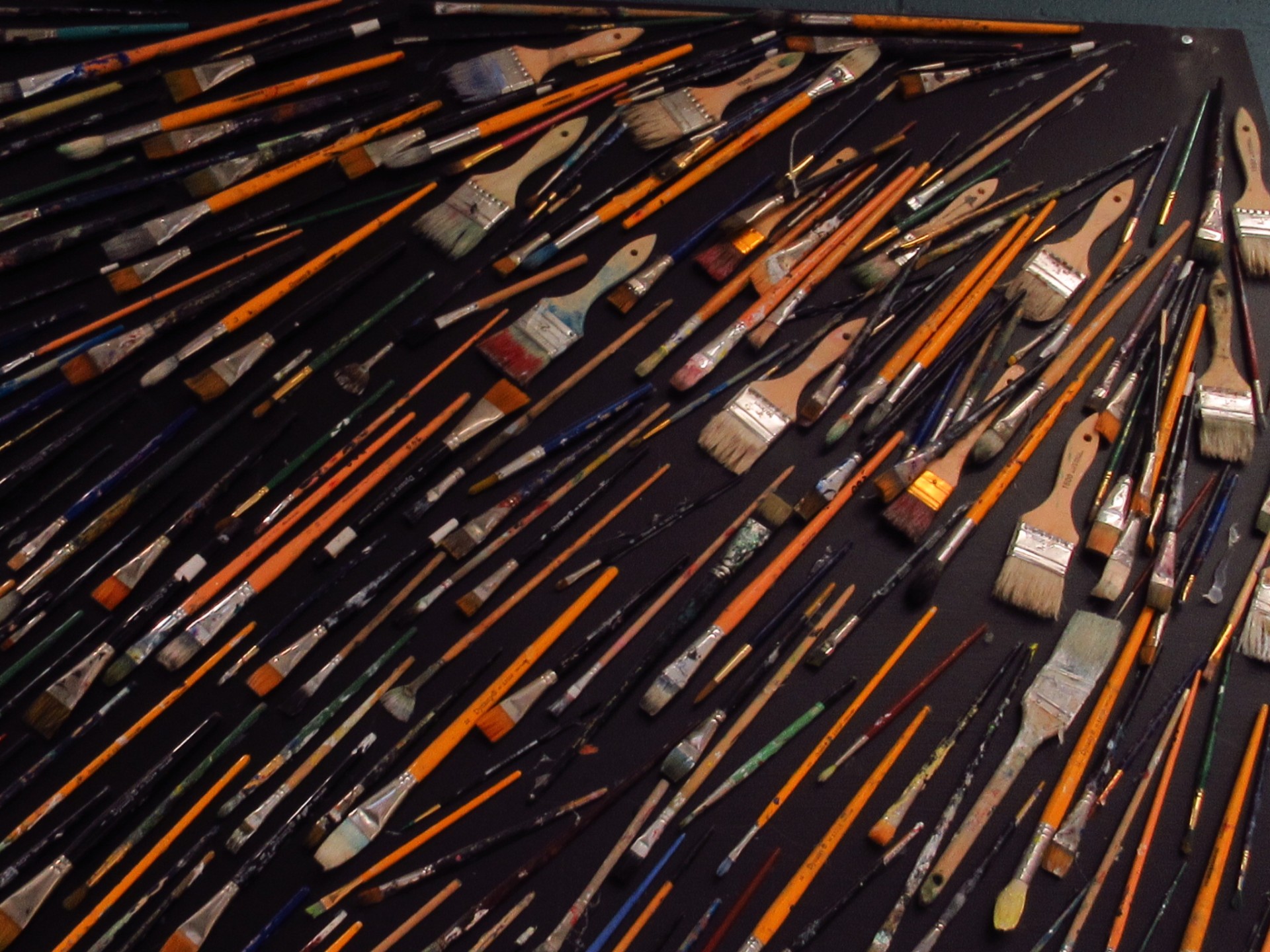
Art class in school involves a lot more than just a Crayola marker scribble that will end up hanging on your refrigerator. Anyone who’s passionate about the arts can recall many formative moments of experiencing a work of art pushing through a creative challenge.
When we’re exposed to remarkable artworks or have opportunities to create, we find that art is crucial to individual growth and development. Art and music subjects alike encourage self-expression and creativity and can build confidence as well as a sense of individual identity. Similar to math, history, or science, the arts are a way of knowing and understanding the world and the complexity of human experience.
One of Granville High School’s art teacher, Mrs. Noblett, agrees that the integration of fine and performing arts into education isn’t merely an enrichment of the curriculum, but an essential component that nurtures a wide array of skills necessary for students’ holistic development.
“Students who take art classes build strong problem solving and critical thinking skills,” said Noblett. “As they plan, experiment, and make decisions throughout the creative process, they learn to stay flexible and resilient when challenges arise.”
Art can provide an environment and experience that encourages children to sketch out ideas, to paint without pain and to experiment without punishment. Students can take on more ambitious and riskier approaches to learning, instead of settling with mediocre success. The practice of making art, and making mistakes along the way, enables students to rehearse making choices and seeing the consequences.
“Anyone can feel anxious and frustrated when trying new things and making mistakes.” the other art teacher at Granville High School, Ms. Tinnel, said. “Art can help students learn how to recover and use mistakes as an opportunity to learn.”
Aubrey Baumbach, junior and art club president at GHS, has loved art her whole life and greatly enjoys the art classes at our school and how they enable her to explore, imagine, and create in ways that other subjects don’t necessarily allow.
“It helps me relax you know?” said Baumbach. “Art gives me a break from my stressful classes and lets me focus on the things I love.”
Engaging in art and creative activities can have physiological effects that reduce stress and promote well-being. The many growing improvements for overall motivation, thinking, and academic achievement are noted by Pediatrician Dr. Perri Klass in the New York Times which outlined the benefits of art education in schools.
Reports from the National Endowment for the Arts in the United States link arts to improved test scores, enhanced reading and language skills, and higher rates of going to and completing college. Foregrounding creativity can be especially effective for students who struggle to retain information from traditional lectures and reading assignments alone.
School in general can be a very stressful place, it can sometimes even feel like following a strict script. Yet, that’s not what we’re made to do. We’re made to be our own person, we’re made to go off and do something that someone else hasn’t done before. Art opens up those possibilities to think beyond what we already know. At every stage and in every school, the arts can help deepen an understanding of the world and even oneself.