

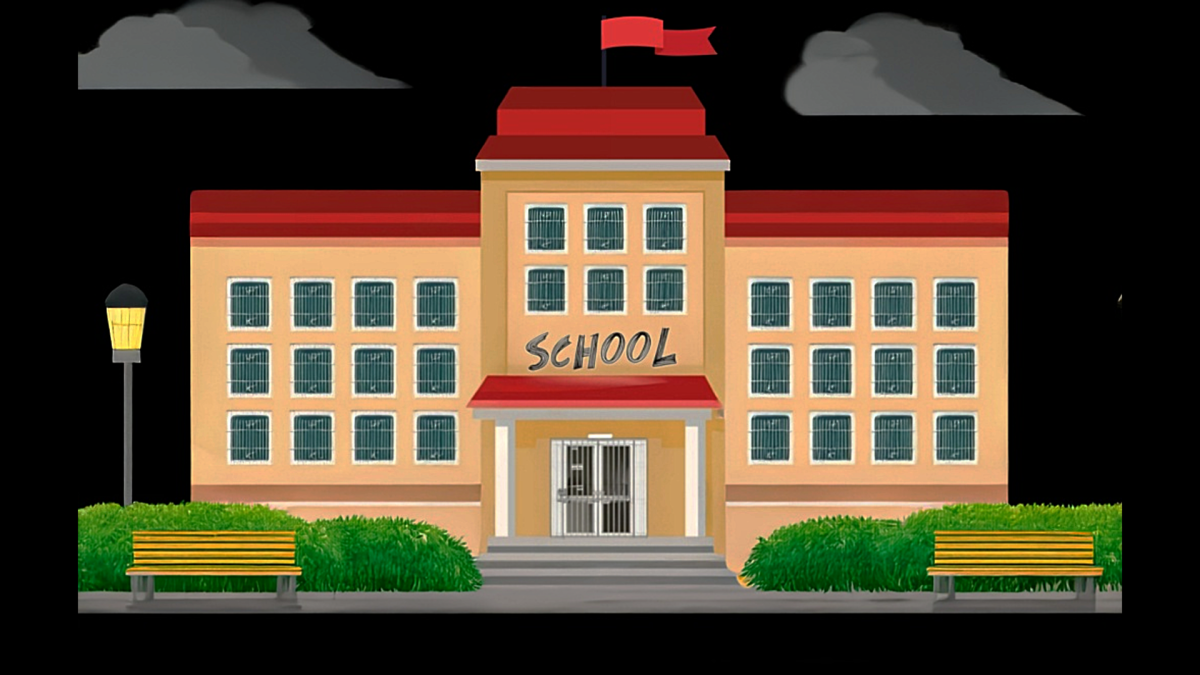
The alarm buzzes at 6:30. The bus smells faintly of diesel as cold winter air bites against the cheeks of students walking toward the same red brick building that’s stood for decades. Inside, the walls are lined with motivational posters printed in identical fonts, each one fading around the edges. The bell rings, and students flood into the same type of classroom they’ve sat in since first grade. White walls, even rows of desks, and everyone opening to the same textbook page.
No one says it out loud, but the message is clear: everyone should learn the same way, at the same speed, in the same space. But this is atrocious. No two people are alike, not in the color of their hair, the look on their face, or the way they understand the world. Learning should directly reflect those differences. Education should be as individual as the students’ personalities.
This scene is familiar in schools across America. This is the preposterous issue. For decades, schools have functioned around standardization; the idea that if every student learns the same material in the same way, we can measure success fairly. But logistically that always fails to recognize the diversity of a classroom.
Every student absorbs information differently; therefore, they should be learning differently: some learn through visuals best, some learn through discussion best, others through hands-on activities; yet curriculum’s rarely account for that. Instead, they continue to reward students who fit that mold almost perfectly and frown upon those who don’t. The aftermath is a system that values uniformity over understanding, and in doing so, leaves countless students behind. This is what makes school uniformity match a prison. Is this a setting for learning or a stagnation to change?
The cost of this anxiety filled learning isn’t measured in grades; it’s written on their stress filled faces. You can see it slumped in the class when each student is staring at the clock waiting for each period to end. These are the effects of the one size fits all model that are put on students to advance into higher learning or the work force. When students are forced to learn in ways that do not fit their thinking process, they stop seeing themselves as capable learners. Creative thinkers are told to “focus”, hands-on learners are told to just “sit still” and visual learners are told to Listen harder. This goes against how our minds work.
An American Scientist and author Tedd Rose said in a Ted talk, “Average is designed for nobody” then went on to say, “because we’ve built classrooms on average, they cannot possibly do what we have expected them to do.”
He’s right. Every student has strengths and weaknesses, not one student is the same. The moment we start teaching “average” is the moment each student erases what makes them unique. The quick thinkers get bored, the slow learners are left in the dust, and everyone is squeezed into a mold that fits no one. The system is broken; students’ dreams are shattered, and geniuses who could innovate in the future are silenced.
Not only have the young minds of students felt the mold squeeze them in similarity, but scientific studies prove it as well. Research in cognitive psychology has shown that students recognize what helps them learn best, things like explaining concepts, practicing recall and mixing up subjects. Yet we rarely use these methods. Why? Because the system doesn’t reward real understanding. All it does is tell students to memorize and repeat, then stare at points and percentages. How is this going to help somebody go into the real world?
The truth is it’s not. As soon as students step out of the classroom, they quickly realize that the world values creativity, problem-solving and adaptability… skills that cannot be measured by standard multiple-choice tests. The ability to be able to think critically and apply real world knowledge from the things around us is far more valuable than the simple ability to learn something for a test and forget. We need to expand on our thinking in schools, teach students how to problem solve and show directly how creative students can be by using more hands-on activities.
Some argue that it’s best to keep standardization because it keeps the education system organized and efficient. With tons of students across the country, a uniform classroom ensures the same material is taught and the same expectations across classrooms. It allows schools to track progress and make sure that no one is missing critical knowledge. In theory, this structure should prevent chaos and keep learning organized. But generally, efficiency does not equal understanding, when lessons are built for speed and efficiency students tend to fall behind. A system focused on teaching each student identical lessons may appear successful on paper, but it fails to recognize how unique each student is. Education should not be about checking boxes; it should be about inspiration and finding what students want to do.
If we want to fix this corrupted issue, here’s how we should go about it. We need to start with how time in school is used. The rigid bell schedule needs to go: forty minutes here fifty there and thirty minutes of a break for lunch. Instead, real understanding takes time, focus and without frequent interruptions.
Instead of forcing every student at the same pace, schools should try what I call a more adaptable free-range schedule. A free-range schedule is a schedule in which no student has a time limit in a class but instead they can focus on one target at a time as long as they meet all the school’s criteria by the end of the year. This would allow students to meet core requirements while being able to dive deeper into things that interest each student. A student interested in science engineering would be able to get extra time in a lab, while a student deeply invested in literature could spend more time in a writing workshop and book talks. Learning should not be divided by the sound of a bell; it should flow naturally with each student’s strengths.
Education should never be about making each student fit into a mold that is built for no one; it should be about each student taking their own shape, and the space to grow on their own. The current standard has been taking a toll on individuality and replacing curiosity with compliance for too long. By re-thinking rigid schedules, embracing flexible learning, and creating an environment that extends instead of restricts, students will be able to learn and adapt more than the world has ever seen. The idea of school should not be to produce identical graduates, but to cultivate unique minds to send into the real world. After all, schools shouldn’t be like prison unless it’s a course on how to escape it.

Steve Goldston • May 21, 2026 at 10:24 am
Very well written and this surely could be used for a really insightful discussion. One thing you didn’t mention however is in this state the Republican Super Majority in the Legislature have taken upon themselves to dictate what educators can and cannot talk about. I wonder if this has also discouraged dialogue about how our Democratic system is under attack. My hope is your generation does better. The only way to change this antiquated system is vote”the bums” out. Keep writing Barrett. I’m proud of you
Steve Goldston