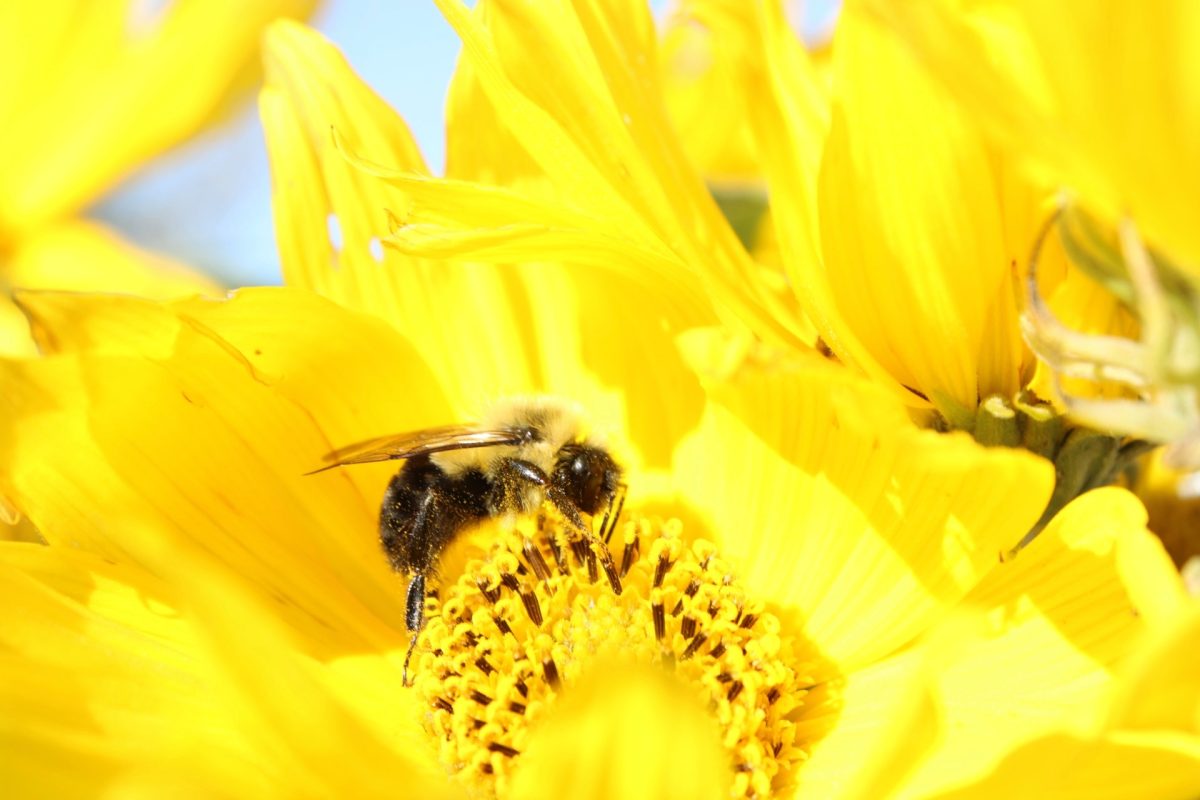
What an average person knows about bees would not go far in a trivia contest. Bees originated some 120 million years ago and now comprise more than 20,000 described species, with over 4,000 of them residing in the United States. Wherever there are insect-pollinated flowering plants in forests, farms, cities, and wild lands, there are bees. Unfortunately, the population of this creature has been in decline for many decades, with a rapid acceleration in recent years.
Now exactly what is contributing to this decline? In the United States alone, about 1 billion pounds of conventional pesticides are used each year. This staggering number plays a part in the overwhelming number of scientific studies linking bee declines to pesticide use and illustrating the far reaching impacts toxic chemical pesticides have on a wide range of environments.
It is accurate to say that proponents of pesticide use may not even be targeting bees directly, as pesticides are simply used in agriculture to control weeds, insect infestation and diseases. Yet this does not stop the fact that bee populations have declined some 43% in areas with high pesticide use.
Pesticides, particularly insecticides, have been demonstrated to have a broad range of lethal and sub lethal effects on pollinators under controlled experimental conditions. One way pesticides can kill bees by means of direct contact of the insecticide on the bee while it is foraging in the field where pesticides have been sprayed and the bee immediately dies and does not return to the hive.
In this case the queen, brood, and nurse bees are not contaminated and the colony survives. The second more deadly way is when the bee comes in contact with an insecticide and transports it back to the colony, either as contaminated pollen or nectar or on its body.
Bees play a crucial role in pollinating crops and maintaining biodiversity. Without them, many plants, including those that produce fruits, vegetables, and nuts, would struggle to reproduce. Additionally, bees contribute to ecosystem stability by supporting the growth of plants that provide food and shelter for other wildlife. Bees and other pollinators contribute directly to food security. According to bee experts at the Food and Agriculture Organization (FAO) of the United Nations, a third of the world’s food production depends on bees.
Everyday people can help educate others about the fascinating nature of bees and pollinators. Their vital importance to our planet and the human race, the challenges they face, and ways we can help protect them should be knowledge that everyone has. Now it might be hard to think that, you, one person, can help make a change but effort is effort in the end. From simply just being educated on the matter to planting bee safe gardens, you can be the change.
Here are some actions we can take to help preserve bees and other pollinators:
- Plant bee-friendly flowers
- Buy organic and local produce
- Encourage wild areas remaining wild
- Avoid using synthetic pesticides, herbicides, and other chemicals
- Adopt or buy a beehive
- Volunteer and advocate
- Support local beekeepers
- Spread the word!