


Since its inception in 2013, the Land Lab in front of Granville Intermediate School has been making a large impact on the environmental structure of the Granville community. The roughly 5 acre plot of land was set aside to provide the Licking County area with a state-of-the-art environmental research facility, a goal that came to be through the AP Environmental Science “Take Action” project.
The Land Lab has been an impressive undertaking for the town of Granville, and is actually the largest outdoor K-12 educational facility in all of Ohio. The main goals of the Land Lab are restoration of the area in front of the intermediate school, and providing a unique area for hands-on learning about different life and physical sciences.
The Land Lab actually began as a Take Action project itself when students in 2013 had the idea to turn about 5 acres of land in front of the intermediate school into a conservation area. Since then, the efforts of other Take Action projects and wildlife groups such as the U.S. Fish and Wildlife Service’s Partners for Fish and Wildlife Program, have expanded the Land Lab into what it is today.
Under the direction of teacher Jim Reding, the AP Environmental Science students have brought about great change to the Land Lab through their Take Action projects, making many different additions over the years.
“Take Action projects started ten to fifteen years ago. The idea was, as students looked at these issues, it wasn’t until you actually engaged in them they actually do them,” Reding told Blueprints magazine in 2016. “The whole Take Action program empowers students so that they not only understand the change, but they are part of the change.”
Following the theme of student-led learning and direction, the original idea for the Take Action projects was created by students.
“Students made the suggestion that rather than just talking about these things to instead do these things,” Reding said. “They were the ones who … asked to be involved in and to participate in the Take Action projects; they kind of created the idea.”
Reding also commented on the way the Land Lab was created and has grown as a result of the initiative of students.
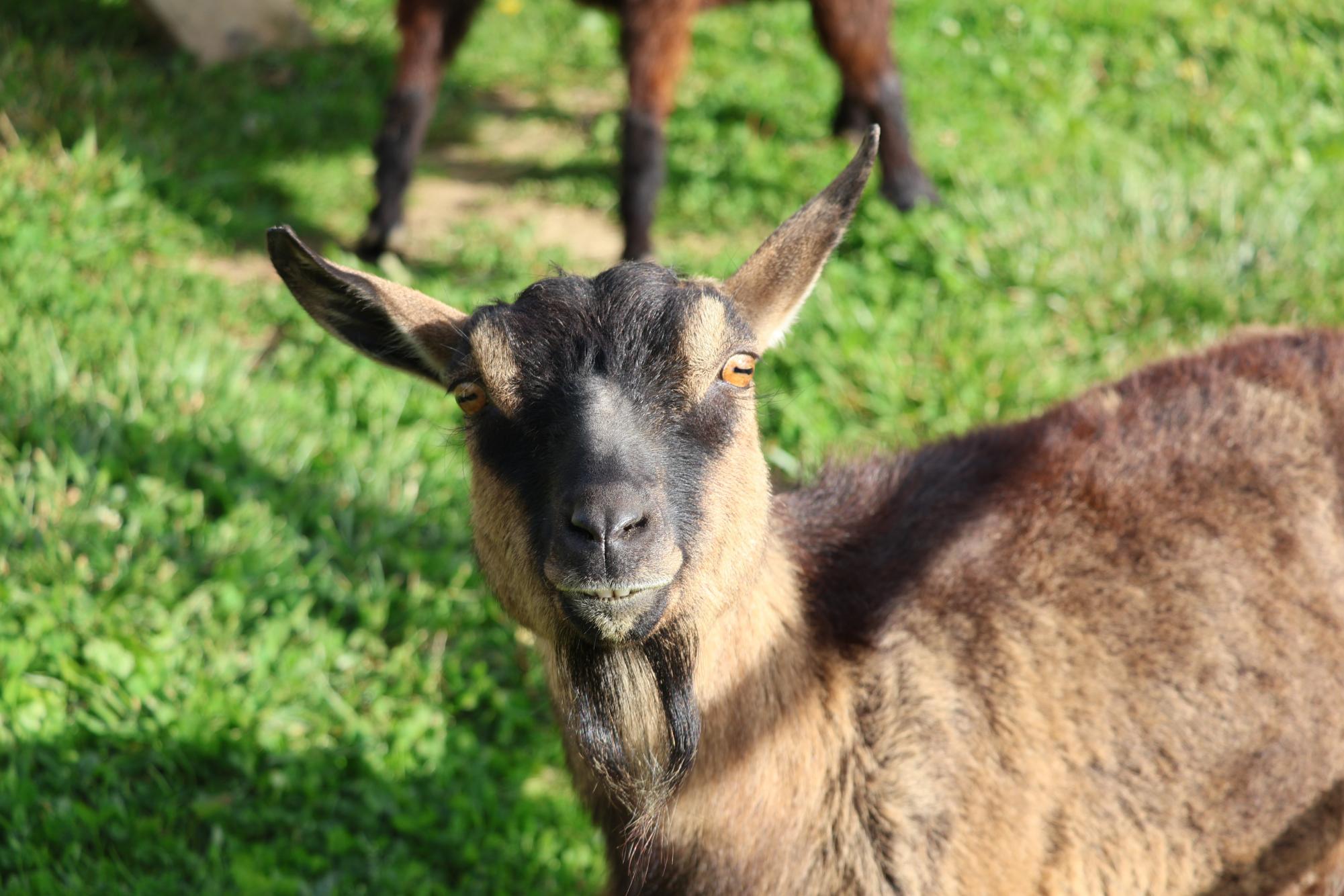
“The Land Lab was a Take Action project, it started out with one group of students and then it built from there,” Reding said. “We just kept adding on bits and pieces of it through the years, everything out there from the Land Lab itself, to the bees, to the maple syrup, and to the goats, it was all just students … picking up the baton and running with it.”
This year, there are a total of 11 Take Action projects featuring a wide range of ideas, from raising money in a music festival, to the direct expansion of the Land Lab, to improving the goat pen.
June Landry, a junior AP Environmental Science student, is working with her group mates on a tree map for their new website. The map will feature a path highlighting all of the most notable and beautiful trees in Granville.
The benefits from these projects extend beyond just the classroom however, this hands on approach that encourages students to figure things out teaches valuable skills.
“I think building the website was one of the coolest parts because it’s just such an applicable skill,” Landry said.
While Landry has specifically noted that communication gaps made the work difficult, the project has presented a steep learning curve for every class. However, Reding remains incredibly proud of how his students navigated these various hurdles to finish their Take Action projects. That perseverance makes walking through the Land Lab today especially rewarding for the teacher.
“There’s not a time that I walk through the Land Lab and don’t think about the passion they had on their projects, the troubles they had to overcome, and the resilience they had to show,” Reding said. “It’s a walk back every single time, but it’s also a look forward, it’s an opportunity to see what’s possible and what could be.”
The environment is obviously the biggest focus of the class and the Take Action projects, which leads all the students to eventually make their decisions around what they want their project to be.
One thing Landry would want to share with her peers about nature via her project is just, “to go outside and appreciate it.
Regarding the environment, Reding has stated that the younger generations, like Gen Z, are going to be the ones seeing the consequences of all our environmentally unfriendly actions. But the Take Action projects have given him hope for the future.
“Over the past 20 years to see the students actually do that work has been really inspiring,” Reding said. “I think I made the right decision in the sense that if you give them the tools the time and the approval to go, they are capable of making significant change.”